LVMH spent somewhere between $250 million and $500 million renovating Tiffany's flagship on Fifth Avenue. Ten stories. Commissioned art by Basquiat and Damien Hirst. A Daniel Boulud restaurant on the top floor. When journalists asked Bernard Arnault about the cost, he waved the question away.
"You can't dream when talking about numbers. When you create desire, profits are only the consequence."— Bernard Arnault
Down the street, Uniqlo paid $350 million for 17,000 square feet of ground-floor retail space. That works out to roughly $20,000 per square foot. More than double what Gucci's parent company paid for their spot a few blocks away.
These companies aren't stupid. They understand something fundamental about commerce: the space where customers encounter your brand shapes every interaction that follows. Your flagship store communicates who you are before a single word is spoken. It tells people whether you're serious, whether you're current, whether you're worth their time.
Now think about your website.
For most established companies, the website gets a fraction of what they'd spend on a single trade show booth. Maybe $40,000 every few years for a redesign. And yet that website handles more traffic in a week than most physical locations see in a year. It's open 24 hours a day, 365 days a year, across every market you serve. It's the first thing a potential customer sees when they Google your name. It's where your buyers go to evaluate whether you're a credible vendor or a company stuck in 2015.
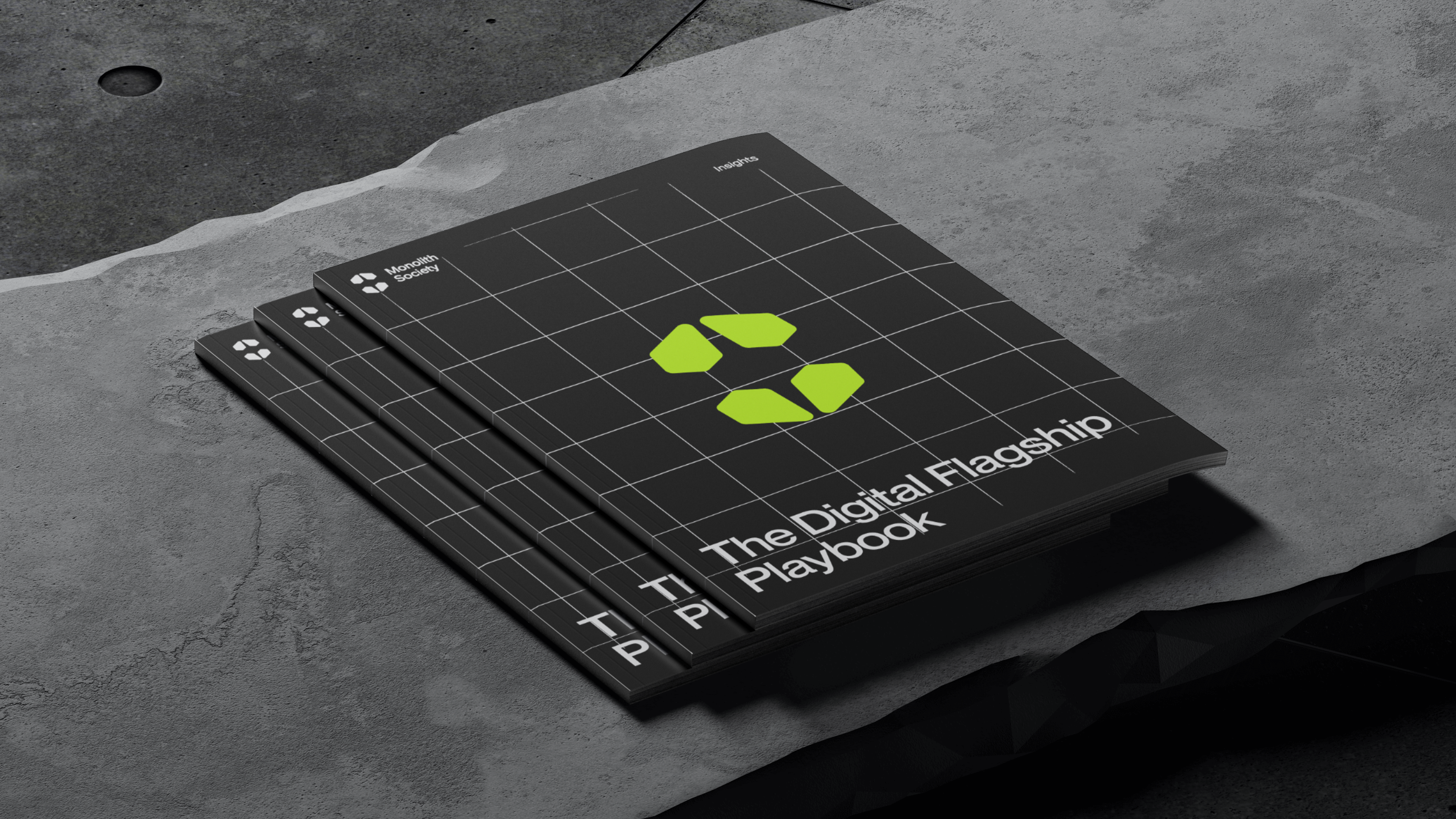
Your website is your flagship. And if you're honest about it, you're probably underfunding it by a factor of 10.
The buyer journey has fundamentally shifted
Here's a number that should concern every CEO reading this: according to 6sense's Buyer Experience Report, B2B buyers now complete about 70% of their purchasing journey before they ever talk to a salesperson. That number has been climbing for over a decade. The original CEB/Google study from 2012 pegged it at 57%. Gartner's research puts it even more starkly: your sales team gets roughly 17% of a buyer's total purchase time. When you factor in that most deals involve multiple competing vendors, any single rep gets about 5% of the buyer's attention.
The share of a buyer's total purchase time your individual sales rep gets. The other 95% happens elsewhere, primarily on your website.
McKinsey's B2B Pulse Survey found that the company website is the number one touchpoint in the B2B buyer journey. McKinsey 2024 Not trade shows, not cold outreach, not LinkedIn. The website. B2B buyers now use an average of 10 different channels during their purchase process (up from 5 in 2016), and the vendor's website sits at the top of that list.
Gartner's sales survey found that 83% of B2B buyers prefer to order or pay through digital commerce channels. A more recent Gartner study from 2025 found that 61% of buyers actively prefer a rep-free buying experience entirely. The direction here is unmistakable.
Your buyers are researching you, comparing you, evaluating your credibility, and often making their decision before your sales team even gets a meeting. And the primary venue for all of that activity is your digital presence.
You have 50 milliseconds. That's it.
Researchers at Carleton University published a study in Behaviour & Information Technology that measured how quickly users form opinions about a website. The answer: 50 milliseconds. That's one-twentieth of a second. Before a visitor has read a word of your copy, before they've scrolled past the fold, before they've even registered what industry you're in, they've already decided whether your site looks credible.
Stanford's Web Credibility Project reinforced this with a study of nearly 2,700 participants. The finding: roughly 75% of users make credibility judgments based primarily on visual design factors. Not content. Not testimonials. Design.
"People do judge a Web site by how it looks. That's the first test. And if it doesn't look credible or it doesn't look like what they expect it to be, they go elsewhere. It doesn't get a second test."— B.J. Fogg, Stanford Persuasive Technology Lab
Now consider what this means for established companies running five-year-old WordPress sites with stock photography and generic page-builder layouts. Every prospect who lands on that site is making a snap judgment. And the judgment they're making is: this company hasn't invested in their digital presence, so maybe they don't invest in their product either.
Compare that to the flagship mindset. When LVMH renovates a store, every material, every sight line, every sensory detail is engineered to communicate quality and intention. The same principle applies digitally. Your website's load speed, its typography, its layout, the way content flows from one section to the next: all of it is communicating something about your company to every person who visits.
The math doesn't make sense (and CEOs know it)
Gartner's 2025 CMO Spend Survey found that marketing budgets have flatlined at 7.7% of company revenue. For a $20 million company, that's roughly $1.5 million in total marketing spend. A significant portion of that goes to events, paid media, and agency fees. The website, which is the single most important touchpoint in the buyer journey, typically gets a sliver.
Average annual trade show spend per company. A single 20×20 booth costs ~$60,000 for 3 days of exposure. Your website runs 365 days a year and reaches far more people.
Your website reaches orders of magnitude more people. It runs every day of the year. It's the number one channel buyers use to evaluate you. And most companies spend less on it than they do on a single event.
This disconnect isn't just inefficient. It's strategically incoherent. You're investing in the channels that influence 5% of the buyer's journey while underinvesting in the one that influences 70%.
What happens when companies actually invest
The data on this is surprisingly consistent. McKinsey's "Business Value of Design" study tracked 300 publicly listed companies over five years using more than 2 million financial data points. Companies in the top quartile for design investment saw 32 percentage points higher revenue growth and 56 percentage points higher total return to shareholders compared to industry peers. The correlation held across medical technology, consumer goods, and retail banking.
McKinsey's separate research on experience-led growth found that CX leaders achieved more than double the revenue growth of CX laggards between 2016 and 2021. Companies that increased customer satisfaction by 20% or more saw cross-sell rates jump 15 to 25% and share of wallet increase 5 to 10%.
Deloitte's digital transformation survey of 1,200 organizations found that digitally mature companies are roughly three times more likely to report revenue growth significantly above their industry average. The gap between leaders and laggards isn't marginal. It's a multiple.
Nike is the case study at scale. Their digital channels grew from 10% of total revenue in 2019 to 26% by 2023. Nike Direct's digital revenue hit $10 billion. That growth didn't happen by accident. It happened because Nike treated their digital presence with the same seriousness they treat their physical flagships.
Salesforce's State of the Connected Customer report found that 88% of customers say the experience a company provides is as important as its products or services. Qualtrics estimates that organizations risk 6.7% of their total revenue when they lose customers due to poor experiences. For a $20 million company, that's $1.3 million at risk.
The generational shift makes this urgent, not optional
According to Forrester, Millennials and Gen Z now make up 71% of B2B buyers, up from 64% in 2022. In deals worth more than a million dollars, 67% of buyers are from these younger cohorts. These buyers grew up with consumer-grade digital experiences. They expect the same from their B2B vendors.
When your website feels slow, dated, or confusing, you're not just failing a design test. You're signaling to the majority of your buyers that you're behind. Forrester predicts that more than half of all large B2B transactions will eventually be processed through digital self-serve channels. The direction is clear: your website isn't becoming more important. It already is the most important.
What a digital flagship actually looks like
When we talk about building a digital flagship, we're not talking about a fresh coat of paint on an existing WordPress site. We're talking about a fundamentally different approach to how your website operates.
A digital flagship loads in under two seconds. It scores 90+ on Core Web Vitals. It's built on modern architecture that separates content from presentation, so your marketing team can publish and update without waiting on developers. It's structured so AI search engines can read, understand, and recommend your content. It works flawlessly on mobile, which now accounts for over 64% of all web traffic.
Most importantly, a digital flagship is designed to evolve. Legacy platforms trap you in three-to-five-year redesign cycles because their architecture couples content, design, and code so tightly that you can't change one without rebuilding the others. Modern composable architecture breaks that cycle. Your content persists through design changes. Your frontend can be updated independently. You move from periodic, expensive overhauls to continuous, incremental improvement.
The question isn't whether to invest. It's whether you can afford not to.
Here's what we see when we talk to established companies. The CEO knows the website is dated. The CMO is frustrated that content takes weeks to publish. The sales team is embarrassed to send prospects to the site. Everyone agrees it's a problem. But the investment always gets deferred because it feels like a marketing expense rather than business infrastructure.
That framing is the core issue. Your website isn't a marketing expense. It's the primary venue where 70% of your buyer's journey takes place. It's the number one factor in how prospects judge your credibility. It's the channel where 83% of buyers prefer to engage. It's the only piece of your business that operates around the clock, in every market, for every customer.
When LVMH invests half a billion dollars in a flagship store, nobody calls it a marketing expense. They call it what it is: a strategic investment in the brand's most important commercial asset.
Your website is that asset. It's time to treat it like one.
Your website is your flagship store. It handles more traffic than any physical location, operates 24/7, and is the number one touchpoint in the B2B buyer journey.
Buyers decide before you know they exist. 70% of the purchase journey happens before a prospect contacts sales. 83% prefer digital commerce. Your website is where that journey plays out.
First impressions happen in 50 milliseconds. 75% of credibility judgments are based on visual design. A dated website tells prospects you're a dated company.
The ROI is proven. Top-quartile design companies see 32pp higher revenue growth. Digitally mature companies are 3x more likely to outperform. Every $1 in UX returns $100.
The generational shift is already here. 71% of B2B buyers are Millennials or Gen Z. They expect consumer-grade digital experiences from every vendor.